
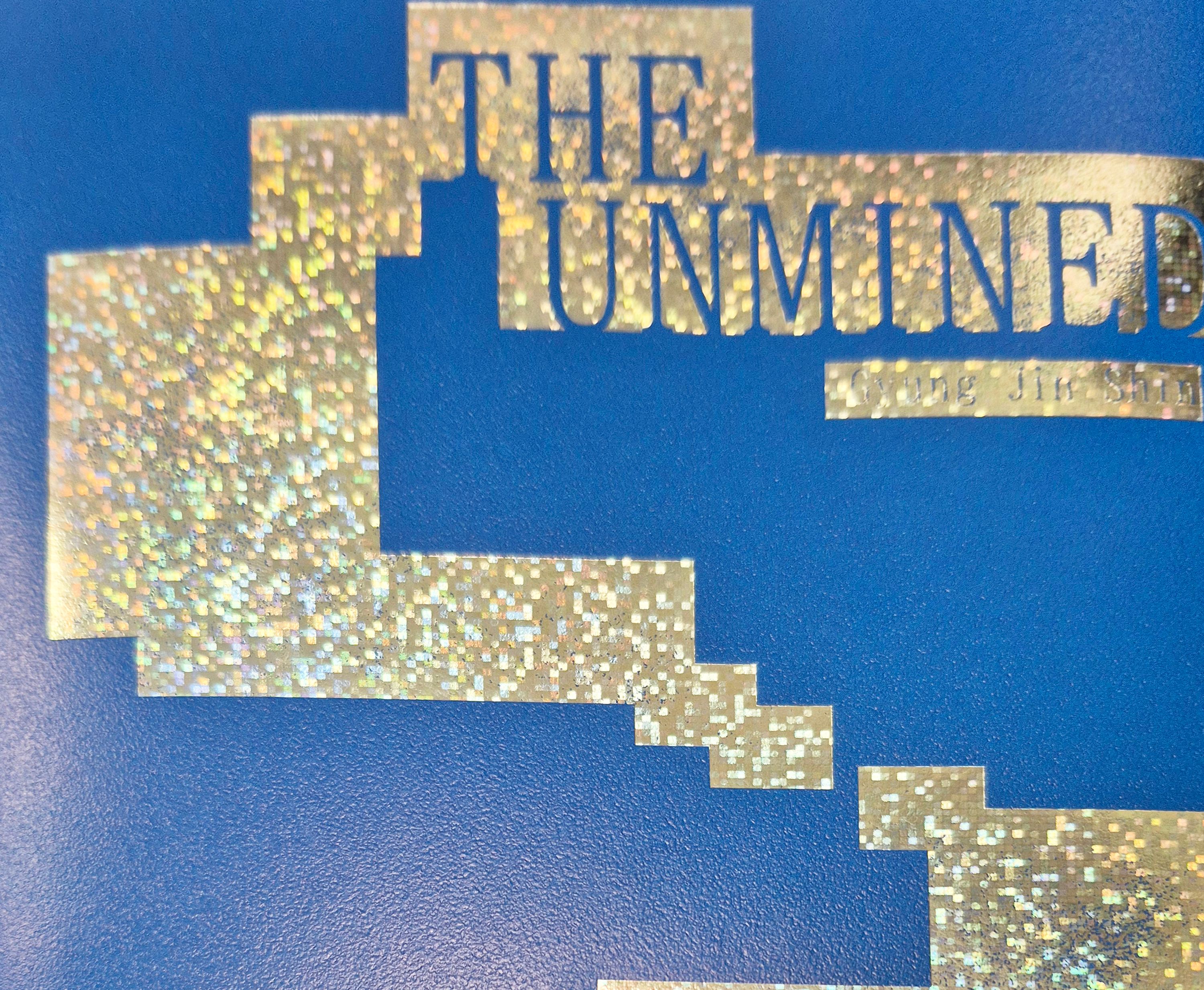
Data as sculptures and network maps
Gyung-jin Shin was a major in sculpture in her undergraduate education; it was a deliberate act to incorporate her first acquired art form in The Unmined which deals with AI and ML.
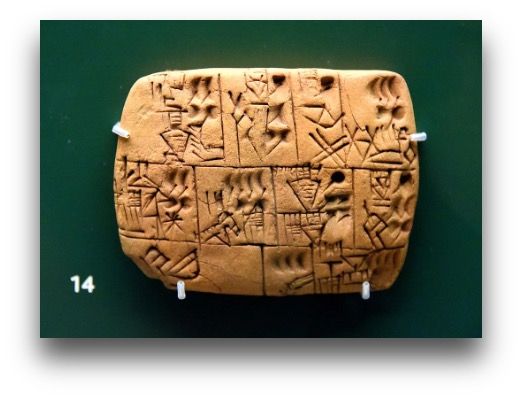
An archaeological precedent of data as sculpture could be the cuneiform (est. 3500 - 3000 B.C.E) developed by the Sumerians of southern Mesopotamia. One of the earliest found instances and records of a database, it took the form of a list on a tablet of rock. This piece of early technology embodied information and sculpture in one object: patterns with signification purpose (writings) were wedged into clay tablets with pieces of sticks (the inscription method). Cuneiform was not their only example of an info-sculpture (or, fashionably, data sculpture?) – the Sumerians also invented measurable time by sculpting markings on a surface to pin down on the 24-hour day-and-night system. Another example from the same period was, also on clay tablet, for recording daily rations of beer issued to workers by a temple (Mesopotamia) around 3100-3000 BCE…
A contemporary example of data turned into sculpture finds Walid Raad’s “Preface to the third edition_Acknowledgement (Relief)” (2014), a part of an ongoing project called Scratching on things I could disavow in which the artist critiqued museum practices in the Arab world and the art market in general. What kind of data did he assemble? Raad noticed that when Islamic art objects were housed in glass vitrines at the Louvre in Paris, the surfaces of the objects seemed to blend with reflections of other nearby, unrelated artworks. Object surfaces and blend-in reflections of neighbour objects are the data he work with – overlapping, mingled and mutating forms turned into a 3D-printed plaster composite sculpture to highlight the "hybrid" shapes, as a commentary on how Islamic art is interpreted through display methods in a foreign country. [11]
The Unmined has mined the data forms of emotions and attempted multiple medium forms. The above cultural and art examples are meant to raise more possibilities of what artists may do by thinking through data, dataset, data container, and the process of data assemblage, and the implications of these various aspects of materiality.
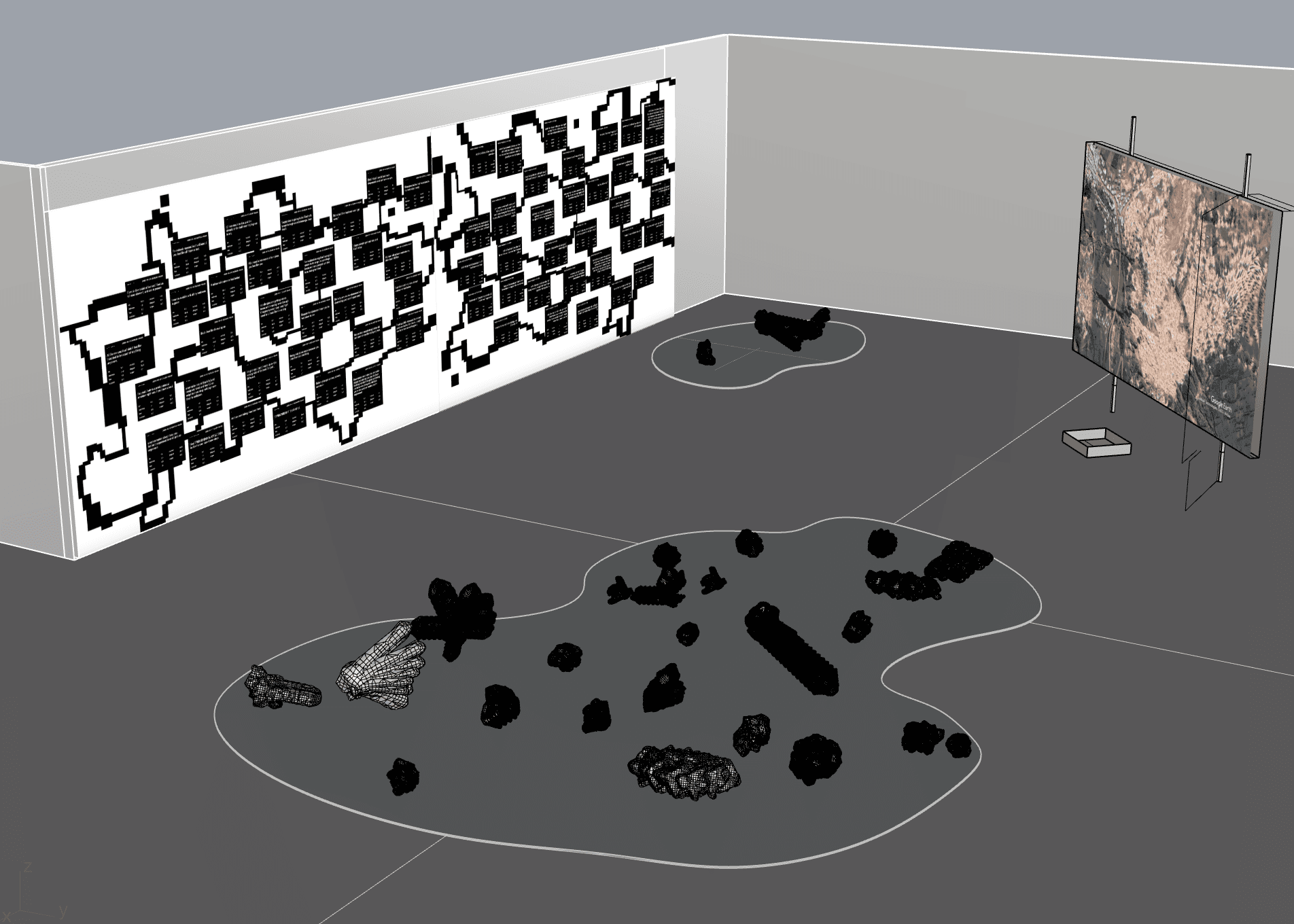
Looking forward…
Though the acclaimed focus of the show is on data manipulation of human emotions, the assemblage method entails a much more organological reality, leaving a lot of empty spaces for other researchers, artists, and Shin’s own future projects.
Afterall, technology is part of our being human, and has always been so; the history of civilization is driven by the invention of new tools. It is the long processes of how we draw from the natural world. Artists’ response to technology often involves turning to metaphors. Or else, they turn to software packages that enhances their on-going practices with greater ease and efficiency, but not necessarily gaining new knowledge of the technology involved in the transmedia process. In such a context, GJ Shin has shared her process of how AI-ML materiality could be more directly deployed as artistic raw material. Trans-disciplinarity is no easy objective. It is an open project; and artists must start somewhere, each with a unique entry point, not to be threatened by our lack of credentials.
I have been most intrigued by Shin’s persistence in building her critical engagement through the many talents that are hers acquired through her education – fine arts, sculpture, interdisciplinary art practice, coding, critical historiography and Critical Theory – and in ensuring integration in her experiments.
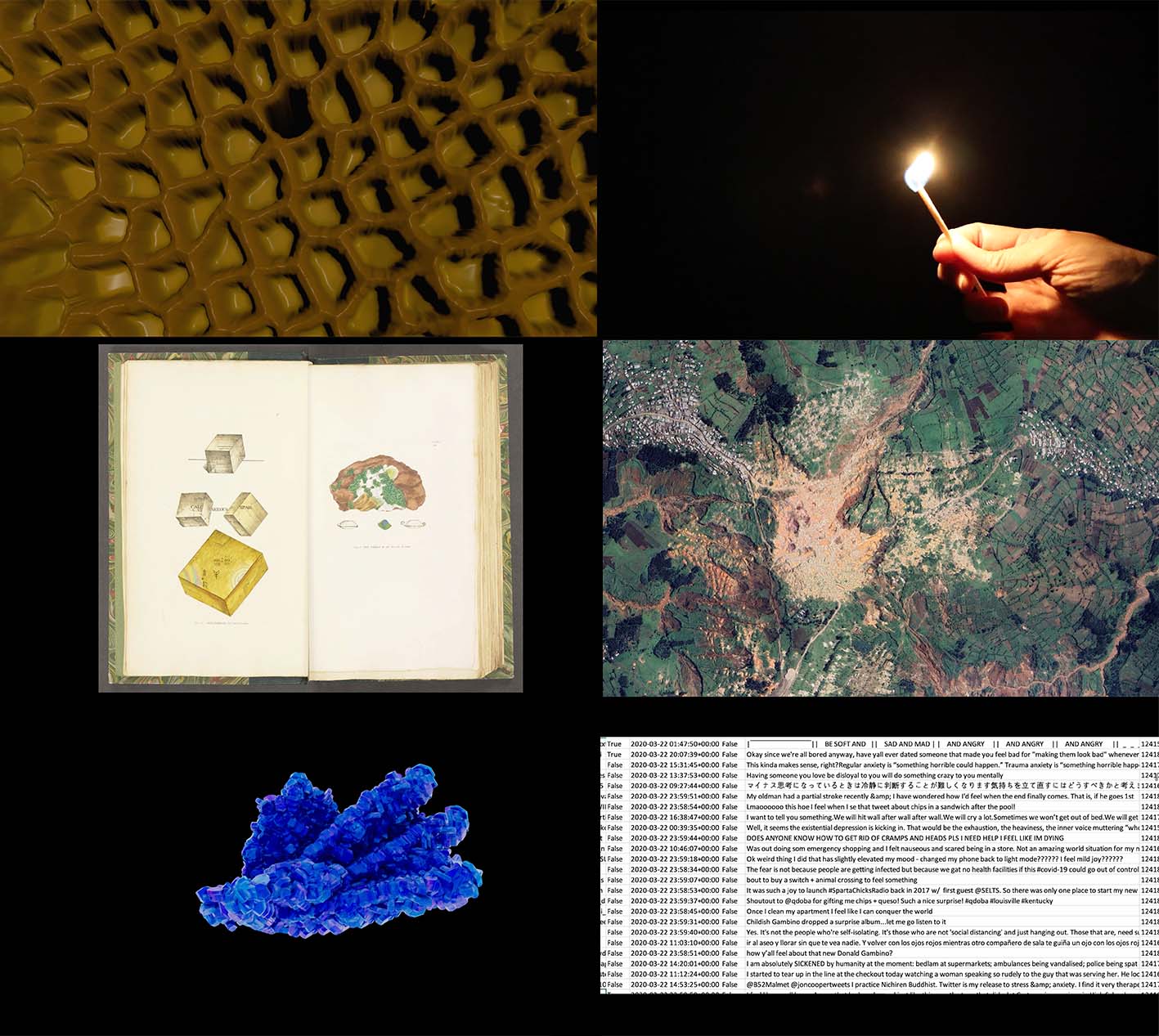
Shin’s show The Unmined is also a tacit objection to being shut off from gaining due knowledge of new technology. As the “tradition” goes, our schooling is the process of continuing specialization, separating the sciences from the arts and humanities for the sake of producing expertise: while this is much founded on the principle of human abilities registered as (human) resources for effective management, we have failed to acknowledge our entrance into a full data society with cybernetic total control. We must be cautious of the force of continuous proletarianization for the sake of consumer’s ease. Artists should reframe what they have been framed for, at least to resist the continuous deprivation of our access to technological knowledge. Perhaps, may we be artist or not, we want to start re-configuring “common sense” to the contemporary person – until we are ready for a philosophical reconfiguration of new ontologies.
END OF ESSAY
/30 January 2026
[11] Walid Raad, “Preface to the third edition_Acknowledgment (Relief)” at: https://www.metmuseum.org/art/collection/search/717490