
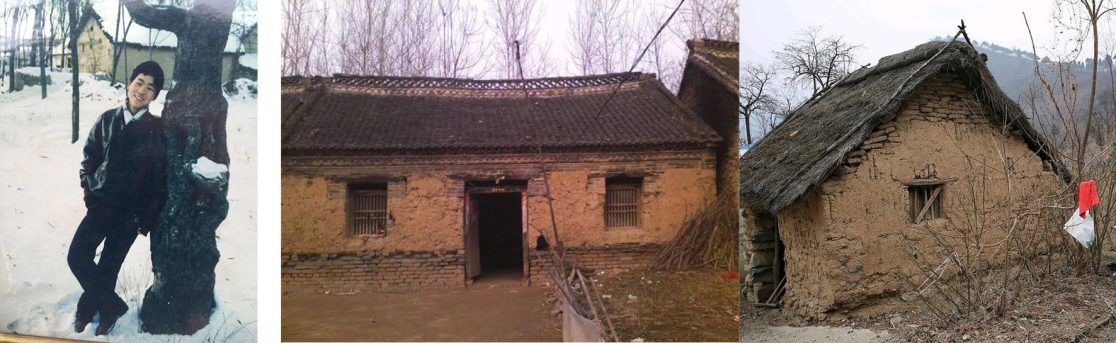
What’s in a picture? A photo is the evidence of an event awaiting forensic examination. Why was the picture taken? What was the general sentiment? What did the photo mean to those in the photo-taking event and does it mean to us as a historical document? Graduate researcher QIAN Xingyu took up an old photo of his father in his young days and teased out the layers of histories, personal, geographical, and social cultural.
Introduction
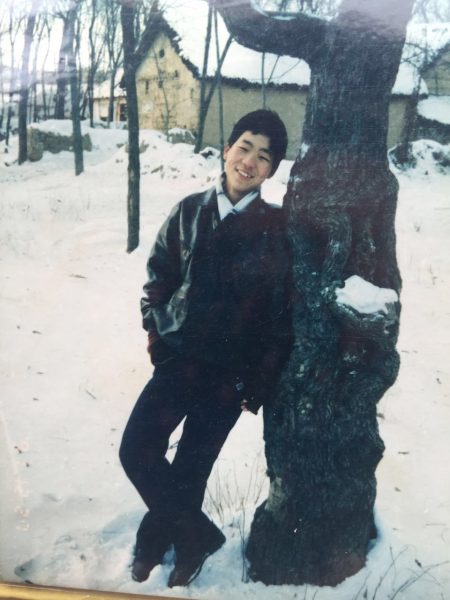 This is a picture of my father when he was young. I’ve seen it many years ago, and recently saw it again because my little brother imitated Dad’s pose in the photo, even his hairstyle. My mom sent me two photos from her phone to show that my brother looks a lot like my dad.
It is obvious that the young man, being placed front and center, is the focus of this photo. Through the expression and posture, his relaxation and joy can be felt, giving the photo a youthful air. The snow, bare branches, clothes and red cheeks all clearly signify the season. The old khaki houses and random trees in the background indicate that the place is a village. The background of the photo is cluttered and the center of gravity is tilted to the right, which suggests that framing and composition were not carefully deliberated. The main purpose of the photograph was to simply document life. The number in the lower left corner accurately indicates that the photo was taken on December 27, 1991.
What was he doing in that period? – Education
That year my father was 18 years old and learning how to become an electrician at Zhengzhou Coal Technical School (now known as Zhengzhou Industrial Technician College). Why did he choose this school and major? First, my father was very good at physics. Second, he was influenced by my grandfather, who was working in the local coal bureau at that time. An important prerequisite for my father to be admitted to this school is that he responded to the policy of converting agricultural household to non-agricultural household (also called urban-town household or urban household), which was implemented in 1988. More importantly, he was able to obtain a job from the government after attending and graduating from this vocational and technical school as a non-agricultural household.
Few ordinary families in the 1990s would consider letting their children go to college to get a high degree, but wanted them to work and get married as soon as possible. According to the data of People’s Daily Online, the admission rate of 1990 college entrance examination was 22%, and the number of admissions was 610,000[1], with the total population of the country being about 1.155 billion [2]. As a comparison, these three figures were 68.7%, 6.57 million and 1.341 billion respectively in 2010. Of course, this is closely related to the changes in the country’s higher education policy. The tight-wide-tight change is very evident in my parents-me-my brother (ten years younger than me). Right now, my mother is worried about whether my brother will get into a regular high school, or maybe he will be forced to choose a vocational high school because of his poor grades. In order to produce more technical blue-collar workers, the acceptance rate of regular high schools is tightening.
About that moment – photography and memory
In my father’s vague memory, it was his classmate Z who took this photo for him with his own Lekai(乐凯) camera, but the exact model of the camera is unknown. Z comes from a dual-earner family. His parents were doctors in the health clinic of the local baking tobacco factory and grain machinery factory respectively, so the family had a stable income and was in a good financial condition. At that time, my father and another classmate, D, lived together in Z’s independent house with courtyard, which was not far from the school. It snowed heavily that day, so my father and a few classmates including Z went to play in the village near the school. He said it was considered “tourism” for them in those days.
Lekai was one of the large state-owned enterprises invested and constructed by the state in that period. Its predecessor was the Baoding Film Factory(保定电影胶片制造厂), the first film factory in New China founded in 1958. The early stage of reform and opening-up was the second important development stage of Lekai: by developing the first generation of color film and color photographic paper in China, it became a “national brand” that competed with Kodak and Fuji, and catered to the domestic market demand brought by “color photo craze”. However, with the rise of digital cameras, Lucky Film AG decided to stop producing color film on September 4, 2012[3].
[image: 3 cameras]
How is the date on the photo created? It is actually overprinted on the negative by a super tiny but very simple LCD projector[4]. A tiny incandescent light is used as the light source, powered by a battery. As you press the shutter, that light flashes to expose the date you set (on the LCD) in a corner of the photo. Why are these numbers always orange-red? Because the color of the film negative is orange-red, a white light source will always appear in its original color. Nowadays, people can also use PS technology to add such orange-red dates to digital photos.
[image: father] [image: film stock]
My father owned one after the film was developed. As you can see from the bottom left corner of the rehashed version my mother sent me, it may have been framed in a frame, but mom said she couldn’t remember where it had been placed. Photography is always about memory. The photos of my father and his classmates then became great reminders of their youth. They pieced together film photos from the past and digital photos from the present to create a digital class album, showcasing the traces of time and the changes of the years.
[4 family photos]
Once also a fashion boy – leather jacket
Since I had a memory, my father never chased the trend in clothing. But in this photo, I found him wearing a leather jacket and shoes, and a light-colored scarf! He told me that leather jackets were very popular in the 1990s, but the price of genuine leather was very expensive. His piece was made of leather, about 60 RMB (now it costs about a thousand RMB).
The leather jacket itself has the advantages of being dirt-resistant and wind-proof. The use of animal skins for clothing dates back to the time when humans were still tribal organizations. The popularity of leather jackets in modern times was mainly influenced by the flight jackets of the two world wars, American cowboy culture and rock music[5], and gradually became associated with “manliness” and ” rebellious spirit”. The reform and opening-up of China has promoted the development of the economy and raised the material level of people’s lives. Leather clothes were expensive and a status symbol of economic affluence at that time. Changes in clothing are also influenced by culture. The 1980s and 1990s were the period when heavy metal rock music and alternative rock music were popular. Leather jackets were often worn by rock stars. In addition, during this period, criminal dramas were popular in China, and wearing leather jackets and carrying leather bags were the standard for police officers in the dramas. Under the influence of various factors, leather clothing was very popular in China at that time.
About the place – old rural buildings
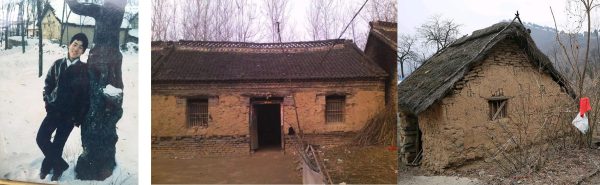
The school where my father studied is located in Xinzheng City, Henan Province, a place with relatively backward economic development. The place in the photo is a small village between my father’s residence and the school. The khaki house is a traditional adobe house common in the countryside, whose foundation is made of stones or bricks, the walls are built with blanks made of earth and painted with a mixture of soil, straw, hemp and lime, and the roof is made of tiles and grass. The use of local materials makes this type of house inexpensive. However, its lifespan is only about 15 to 30 years, and it needs to be repaired every year to make up for the damaged and fallen parts.
【簡介】
這是我父親年輕時的一張照片。 很多年前我就見過它,最近重新見到是因為我的弟弟模仿照片中爸爸的姿態,甚至是髮型。 媽媽通過手機將兩張照片一同發送給我想要說明我的弟弟與爸爸長得很像。 很明顯的人物是這張照片的重點,被置於照片的前景和中心位置。 從表情和姿勢可以看出年輕男子非常放鬆和高興,充滿了青春氣息。 積雪,光禿禿的樹枝,人物的衣服和紅紅的臉頰都明確地表示了季節。 背景中土黃色的老房子和排布隨意的樹木表明這個地方是一個村莊。 照片的背景雜亂,重心向右傾斜,取景和構圖顯然沒有被太多斟酌,拍攝的主要目的是簡單地記錄生活。 左下角的數字準確的表明瞭照片拍攝於1991年12月27日。
【那個時期他在做什麼? –受教育】 那一年父親18歲,在鄭州煤炭技工學校(現名鄭州工業技師學院)學習如何成為一名電工。 為什麼選擇這個專業和學校? 首先,父親很擅長物理。 其次,受到我的爺爺的影響,爺爺當時在當地的煤炭局工作。 父親能夠報考這個學校的重要前提是他回應了國家1988年施行的農業戶口轉非農業戶口(也叫做城鎮戶口或城市戶口)政策。 更重要的是,他以非農業戶口的身份就讀並從這個職業技術學校畢業之後,可以獲得國家安排的工作。 90年代的普通家庭很少會考慮讓孩子讀大學獲得高學歷,而是希望他們早日工作結婚生子。 人民網數據顯示,1990年高考的錄取率是22%,錄取人數是61萬,全國人口總數約為11.55億。 作為對比,2010年高考的錄取率是68.7%,錄取人數是657萬,全國人口總數約為13.41億。 當然這也與國家的高等教育政策的變化密切相關。 從緊到寬再到緊的變化在我的父母,我和我弟弟(比我小十歲)的身上體現的非常明顯。 現在,我的媽媽正在為我的弟弟能不能考上普通高中而擔心,他可能會因為成績不好而被迫選擇職業高中。 因為為了培養出更多的技術藍領,普通高中的錄取率正在收緊。
【關於那個瞬間–攝影和記憶】
在父親模糊的記憶中,是他的同學Z用自己家的樂凱相機為他拍下了這張照片,但相機的具體型號已經不得而知。 Z同學來自一個雙職工家庭,他的父母分別是當地的烤煙廠和糧食機械廠中衛生所的醫生,因此收入穩定,家庭經濟狀況較好。 當時,父親和另一個同學D就一起住在Z家距離學校不遠的獨立小院裡。 那天下了大雪,父親就和包括Z在內的幾個同學一起去學校附近的村莊玩。 他說在那個年代這也算是「旅遊」了。 樂凱是那個時期國家重點投資建設的大型國有企業之一,其前身是創建於1958年的新中國第一個膠片廠——保定電影膠片製造廠。 改革開放初期是樂凱的第二個重要發展階段,滿足了國內「彩照熱」帶來的市場需求,研製出了中國第一代彩色膠捲、彩色相紙,打破了進口品牌對市場的壟斷地位,成為民用照相材料的“民族品牌”與柯達、富士相抗衡。 但隨著數碼相機的興起,樂凱膠片股份公司於2012年9月4日決定停止生產彩色膠捲。[3]
[photo of 3 cameras: 一些乐凯相机 / 图片来源: https://www.997788.com/pr/detail_628_15857943.html; https://www.997788.com/54554/auction_1285_5517629.html;
[photo of father] 照片上的日期是如何產生的? 我沒有玩過膠捲相機所以這個問題讓我感興趣。 我瞭解到,日期實際上是由一個超級微型但十分簡單的LCD投影儀疊印在負片上的。 微型的白熾燈作為光源,電池為它供電,在按動快門的同時,那個燈光閃爍將你在相機上設置好的日期(在LCD上)曝光在照片的一角。 另外,日期總是橙紅色的原因是膠捲負片的顏色是橙紅色的,所以白色的光源照在上面總是會呈現出橙紅色。 如今人們也可以使用PS技術在數位相片上加上這樣橙紅色的日期。
[3 photos of film]
膠片沖洗后我的父親擁有一張,從媽媽發給我的翻拍版本的左下角可以看出,它可能被裝裱在一個相框裡,但是媽媽說她想不起來它被放在哪裡了。 攝影是關於記憶的。 爸爸和同學們當時拍的照片成為了他們回憶青春的好幫手。 他們將過去的膠片相片和現在的數位照片拼湊在一起製作成數位班級相冊,展示時光留下的痕跡,時光對個人的雕刻,歲月的變遷。
[4 family photos: 两本电子相册的一些截图,最右边是我的父亲/ ]完整版本链接: http://sjyy3.kagirl.cn/kphoto/fakeshowbook.php?bookid=KPFArkq_BczGtUOh881XtTVxUM0rlLHl&wxid=sjyy; https://g0gg11.gariau.cn/kphoto/seealbum.php?wxid=sjyy&bookid=KPFArkq_BcyIEroG_PWAINPhIMAMU88N&olwxid=&shareflag=1&onmake=false ]
【曾經也是個時尚男孩-“皮衣”】
自我有記憶開始,父親從不在服飾上追趕潮流。 但在這張照片中,我發現他身著皮衣和皮鞋,還帶了一條淺色圍巾! 他告訴我說皮衣在90年代很流行,但是價錢非常昂貴,他這件是皮革的,大概60人民幣(現在一件大約要上千塊)。 皮衣本身具有耐臟和擋風保暖的優點。 使用動物的皮毛做衣服可以追溯到人類還是部落組織的時期。 近代皮夾克的流行主要受兩次世界大戰飛的行員夾克、美國牛仔文化和搖滾音樂的影響,逐漸與“男子氣概”和“反叛精神”聯繫起來。 改革開放促進了中國經濟的發展,提高了人們生活的物質水準。 皮衣價格昂貴,是經濟富裕的一種身份象徵。 改革開放還引入了外來文化,80、90年代正是重金屬搖滾樂和另類搖滾樂流行的時期,皮衣是搖滾明星經常穿著的服飾。 另外,這個時期中國流行刑偵劇,穿皮衣、拿皮包是劇中員警的標配。 因此,皮衣當時在中國非常熱銷。 【關於這個地方–鄉村老建築】 父親讀書的學校位於河南省新鄭市,是一個經濟發展比較落後的地方。 照片中的這個地方是父親的住處與學校之間的小村莊。 土黃色的房子是鄉村傳統的土坯房,其基礎使用石頭或者磚,牆是用土打的坯子壘起來,再用土、麥稈、麻和石灰的混合物粉刷,房頂是用草做的。 這種房子就地取材、造價便宜,其壽命大約是15到30年,需要每年進行修整彌補損壞脫落的部分。
[3 photos of village: 农村的土坯房 / 图片来源: https://huzhou.focus.cn/zixun/ff078e0825fea1d4.html; https://baijiahao.baidu.com/s?id=1700798864736106607&wfr=spider&for=pc ]
【關於這個地方–鄉村老建築】
父親讀書的學校位於河南省新鄭市,是一個經濟發展比較落後的地方。 照片中的這個地方是父親的住處與學校之間的小村莊。 土黃色的房子是鄉村傳統的土坯房,其基礎使用石頭或者磚,牆是用土打的坯子壘起來,再用土、麥稈、麻和石灰的混合物粉刷,房頂是用草做的。 這種房子就地取材、造價便宜,其壽命大約是15到30年,需要每年進行修整彌補損壞脫落的部分。
[1] National statistics on the number of participants and admissions in the college entrance examinations. (n.d.). Retrieved February 14, 2022, from http://edu.people.com.cn/n/2013/0503/c116076-21359059.html 全国历年参加高考人数和录取人数统计. 来源:http://edu.people.com.cn/n/2013/0503/c116076-21359059.html
[2] China’s population. Baidu baike. (n.d.). Retrieved February 14, 2022, from … 中国人口. 百度百科. 来源:https://baike.baidu.com/item/%E4%B8%AD%E5%9B%BD%E4%BA%BA%E5%8F%A3/4417422?fr=aladdin
[3] Lekai. Baidu baike. (n.d.). Retrieved February 14, 2022, from… 乐凯. 百度百科. 来源:https://baike.baidu.com/item/%E4%B9%90%E5%87%AF/825366?fr=aladdin
[4] How a film camera superimposes the date onto photos. youtube. 来源:https://www.youtube.com/watch?v=ezME4_xMMnk
[5] Xueqian WU. The Aesthetics and Changes of Leather Garment Pop Culture in the 20th Century of the West [J]. Leather Science and Engineering,2019,29(05):64-68.DOI:10.19677/j.issn.1004-7964.2019.05.012. 武学谦.二十世纪西方皮衣流行文化的审美与变迁[J].皮革科学与工程,2019,29(05):64-68.DOI:10.19677/j.issn.1004-7964.2019.05.012.