
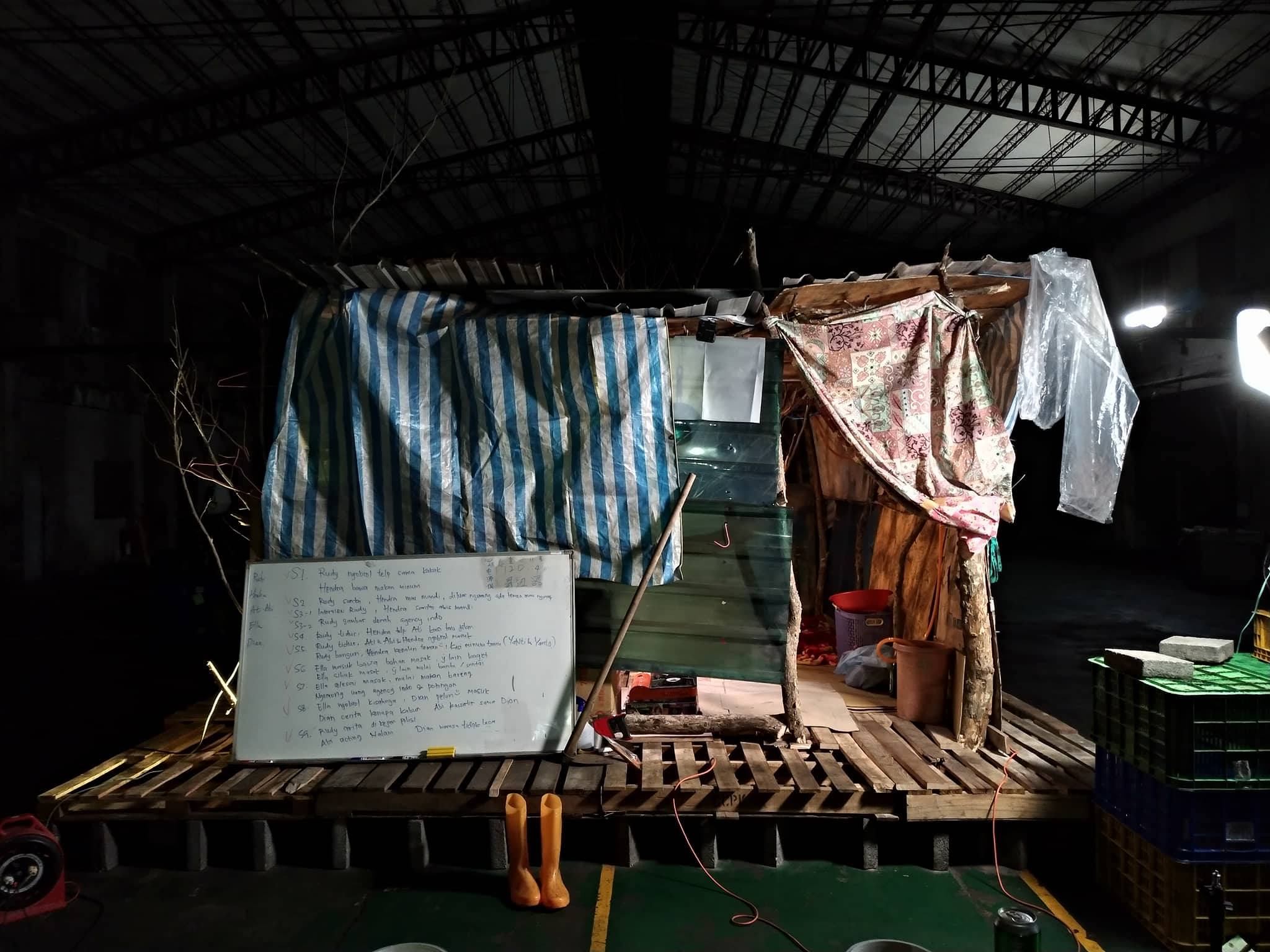
If documentaries are not just for viewing and getting new information, what else can it be? The two keywords "participatory" and "bodily engagement" speak of documentaries as the result of caring for our environment enough to strategies actions to research out. Reenactment is to become them (the migrant workers) in order to be able to narrate their experience. (Editor's notes)
How to narrate and reenact the bodies of migrant workers? The three key creative concepts of Your Bros. Filmmaking Society / Emilie Choi
**中文版在英文版之後 For a brief introduction of the two works discussed and the makers involved, go to the end of the post.
Your Bros. Filmmaking Group (abbreviated as "Your Bros.") is formed by three artists/creators from different backgrounds: contemporary artist SO Yo-hen, architect TIEN Zong-yuan and art historian LIAO Hsiu-hui. As a collective, they focus on the issue of migrant workers, circumventing the reduction of these individuals to mere subjects of documentation. They interact, learn from and create with migrant workers through a distinctive methodology by employing field research and creative workshops. How does this participatory art approach challenge and even provoke the inherent power dynamics and ethics of documentary filmmaking? In the context of “reenactment”, the theme of this year's Jumping Frames – Movement Image Festival, how does Your Bros.’s creative methodology rewrite the narratives of actual news events through embodied experiences and interpret the complexities? This article endeavors to address these questions using key themes such as #documentary, #collective, and #body.
#Documentary (#ParticipatoryArt #Reenactment)
The current discussion on documentaries often falls into Bill Nichols' seven modes of documentary classification. Undoubtedly, this categorization has laid the foundation for a more accessible cognitive system for the general public. However, it has also become an overly simplistic framework that fails to respond to the increasingly complex forms of documentaries. In recent years, the entanglement between documentaries and contemporary art has become intricate. Many exhibition films adopt the documentary format (known as the "documentary turn"), and a greater number of documentary works are attempting to enter the realm of contemporary art exhibitions (such as the Chinese independent documentary director Wang Bing). This evolution may expand the boundaries of documentaries and continuously redefine the "definition" and interpretation of documentaries. Scholars such as Erika Balsom and Hila Peleg have pointed out how contemporary art disrupts the mechanisms of documentaries and opens up new aesthetic possibilities. However, we cannot ignore the potential risk that the trajectory of "contemporary art" may gradually bypass the care for the reality of the filmed subjects. Will the institutional framework of contemporary art absorb the untamed roots and agency that documentaries originally possessed?
Your Bros.’s unique creative approach precisely responds to this context, showcasing a strategy that blends documentary and contemporary art. In various interviews, Your Bros. has mentioned that the formation of this group originated from a book club where members initially read Huang Chunming's "Sāyānàlā. Goodbye," which inspired a path of realism in Taiwanese literature. Interestingly, they did not remain within the aesthetic forms of realism but sought alternative ways of intervention and connection. They became aware of the situation of migrant workers in Taiwan through news media and conducted in-depth field research, engaging in exchanges and interactions with migrant workers through long-term workshops. The creative process and intervention occurred prior to the activation of the camera.
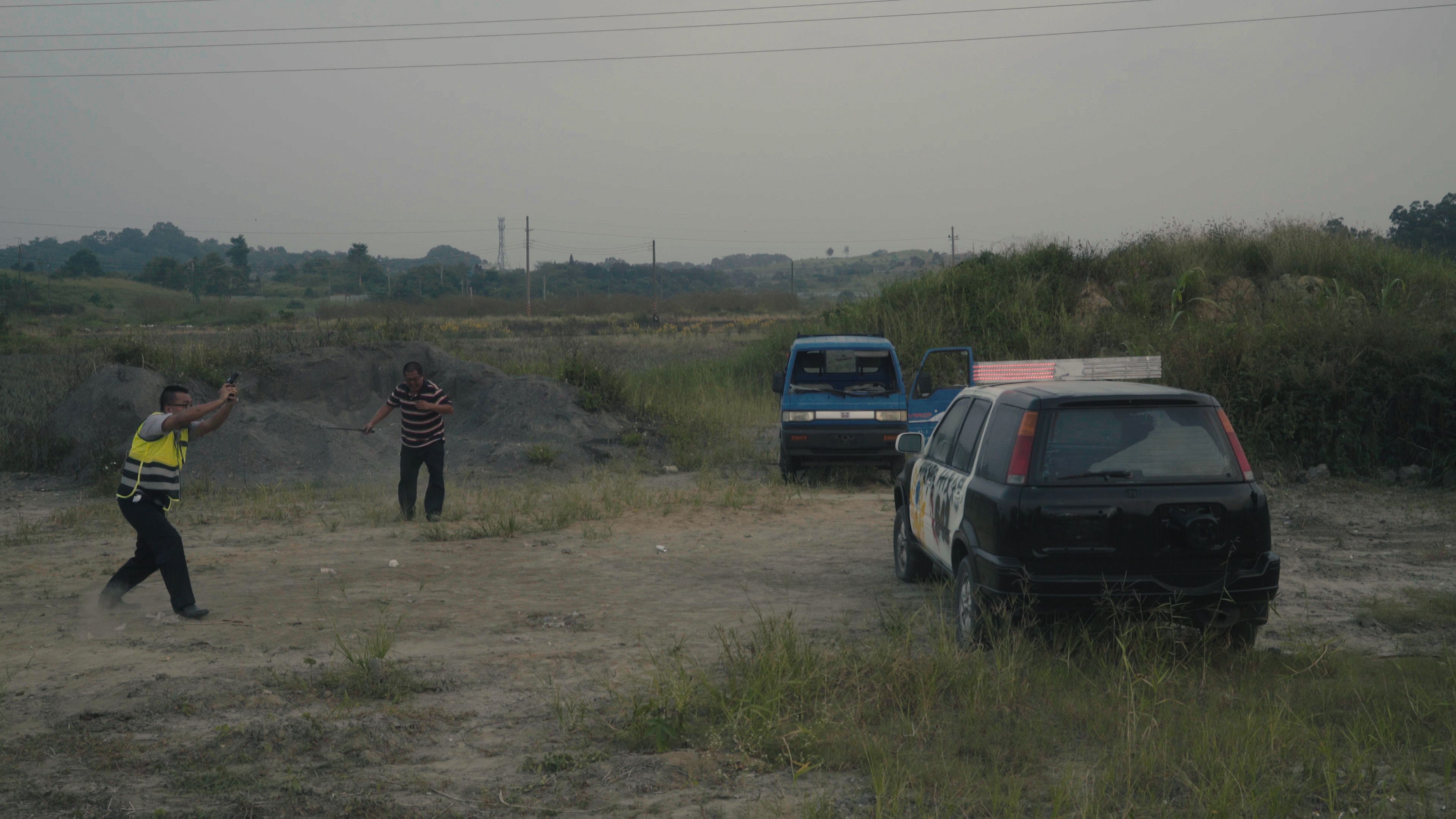
This workshop-driven approach, coupled with rewriting the reality through reenactments, encompasses two crucial aspects. First, it questions and reshapes the production of images. In interviews, Your Bros. has openly questioned how migrant workers are portrayed in the mass media (as discussed in the interview in this zine). The collusion between news reports and social consensus or ideological manipulation to marginalize specific ethnic groups is not uncommon. When those in positions of power use the guise of filmmaking to capture migrant workers, it raises the question: Does the inherent violence of image production also involve documentary filmmaking methods? How can the filmmaker navigate the inevitable tension and power imbalance between the filmmaker and the subjects being filmed? Reenactment opens up a heterogeneous space within this series of inquiries, loosening the grip of the documentary's obsession with "truthful representation" and enabling a self-reflexive capacity within the documentary medium. Your Bros. emphasizes that the reenactments in their works do not have predetermined scripts. Therefore, in NALAM, we witness Your Bros. humorously reenacting the process of an Indonesian migrant worker Nalam being pursued by the police, even revealing the breakdown of scene coordination without hesitation. In Nguyễn Quốc Phi, the voices from news reports are used as voice overs, synchronously presenting the process of shaping the reenactment scene. In the end, Vietnamese migrant worker Nguyễn Quốc Phi is absent, and only two "police officers'' mimic the scene of Nguyễn Quốc Phi being shot nine times based on news reports and testimonies, turning solid evidence into an open-ended questioning. These two examples also demonstrate how Your Bros. deconstructs the politics of image production through the form of reenactment. The authenticity of documentaries is not a priori but requires the participation and performance of migrant workers. Through the repeated questioning, probing, and destabilization in workshops and the reenactment process, an unsettling "reality" is created, constantly progressing and resisting definitive categorization.
Your Bros.’s approach involves non-professional actors (commonly referred to as amateurs) reenacting the situations they find themselves in as migrant workers. This also brings another aspect: Your Bros. adopts a form of participatory art to engage with the migrant worker community, where the filming process and the edited images no longer take center stage. Instead, the emphasis is on the relationships and communication established between Your Bros.’s team and the migrant workers, creating a unique space where they can express themselves and evolve their own experiences or similar stories in their native languages (thus, the presence of translation becomes an important element, highlighting the inevitable existence of language differences and contemplating how different cultural contexts can be translated and understood by Your Bros.’s team). Through collective (and contemporaneous) action, their approach transforms the original production of images into cultural interventions and community-building, aligning with the principles of Relational Aesthetics closely associated with participatory art. This approach posits social relationships as the foundation (ontology) rather than considering them merely as materials (media), thereby reconstructing the aesthetic politics and mechanisms within the contemporary art system. Your Bros.'s practice also attempts to transform the production space of the film set into an experimental field, challenging the aesthetic forms and order of image production.
More importantly, when migrant workers become the subjects being filmed, how can their labor conditions, social circumstances, and even their limited discursive power be effectively conveyed through the unique medium of documentary filmmaking? This raises numerous ethical issues, including how the filmmaker intervenes, communicates, and narrates without speaking on behalf of the migrant workers. Participatory art is by no means a panacea, but it allows migrant workers to actively participate and engage in the process. Through the reenactment that emphasizes the presence of the camera and the filmmaker (Your Bros.'s works often include bloopers, and in Dorm, there is even a deliberate revelation of the reenactment "film set" space at the end, making viewers aware that this is far from an attempt to reproduce reality), dialogue and discussion can be initiated, dismantling the illusion of reality constructed by mass media.
However, it is important to consider how Your Bros.'s complex contextual framework, artistic techniques, the dialogue space created, and the migrant workers' participatory experiences can be fully presented when his works are showcased in film festivals or exhibition spaces, without being absorbed into a flattened visual production within the cultural system.
#Collectivity
Documentary films, to a large extent, are created through the collaboration between the filmmaker and the subjects being filmed, making it difficult to be understood within the traditional framework of "authorship." When the director-centered shooting mode is removed, collective collaboration becomes another strategy and pathway. The creative collective formed by SO Yo-hen, TIEN Zong-yuan and LIAO Hsiu-hui, allows for the sharing of experiences from different professional fields and the sharing of different positions and responsibilities in the filming process. During the process of filming migrant workers, not only the living conditions of the workers are repeatedly questioned but also the power relations and violence within the process of image production. Therefore, the collective's filming is not solely dominated by Your Bros. and his two teammates. They have mentioned in various interviews that the experiences shared by the migrant workers during the months-long workshops became the starting point for collective creation, and even some workshop processes directly became part of the filming. Your Bros.'s imagination of collectivity extends beyond the singular relationship between them and the migrant workers, but also includes the translators who facilitate cultural translation in their communication with the workers. This collaborative mode of collectivity not only attends to the living and working conditions of the migrant workers but also confronts the unequal power dynamics within the filming process, attempting to dismantle hierarchical relationships in the filming process and establish the collective with a self-reflective attitude.
#Embodiment
Lastly, let's discuss embodiment. The award-winning documentary Nguyễn Quốc Phi, which won the Expanded Award at last year's festival, precisely addresses how reenactment expands the manipulation and imagination of the body. As mentioned earlier, in Nguyễn Quốc Phi, the two "actors" playing the role of police officers comically reenact the physical movements of the struggle and eventual shooting of Vietnamese migrant worker Nguyễn Quốc Phi, based on the limited "evidence." The body is not just a narrative tool for interpreting evidence and statements; in the context of Nguyễn Quốc Phi, the body embodies the impossibility of faithful reenactment (as the actor portraying the central character Nguyễn Quốc Phi is not present). The repetitive bodily movements create a sense of absurdity, prompting us to question the certainty of reality. As scholar Michele Pierson suggests, reenactment is a process of repetition that transforms experience, behavior, or events. In the case of Nguyễn Quốc Phi, the repeated bodily movements expose the original violence and allow the unseen Nguyễn Quốc Phi to be reestablished as a subject.
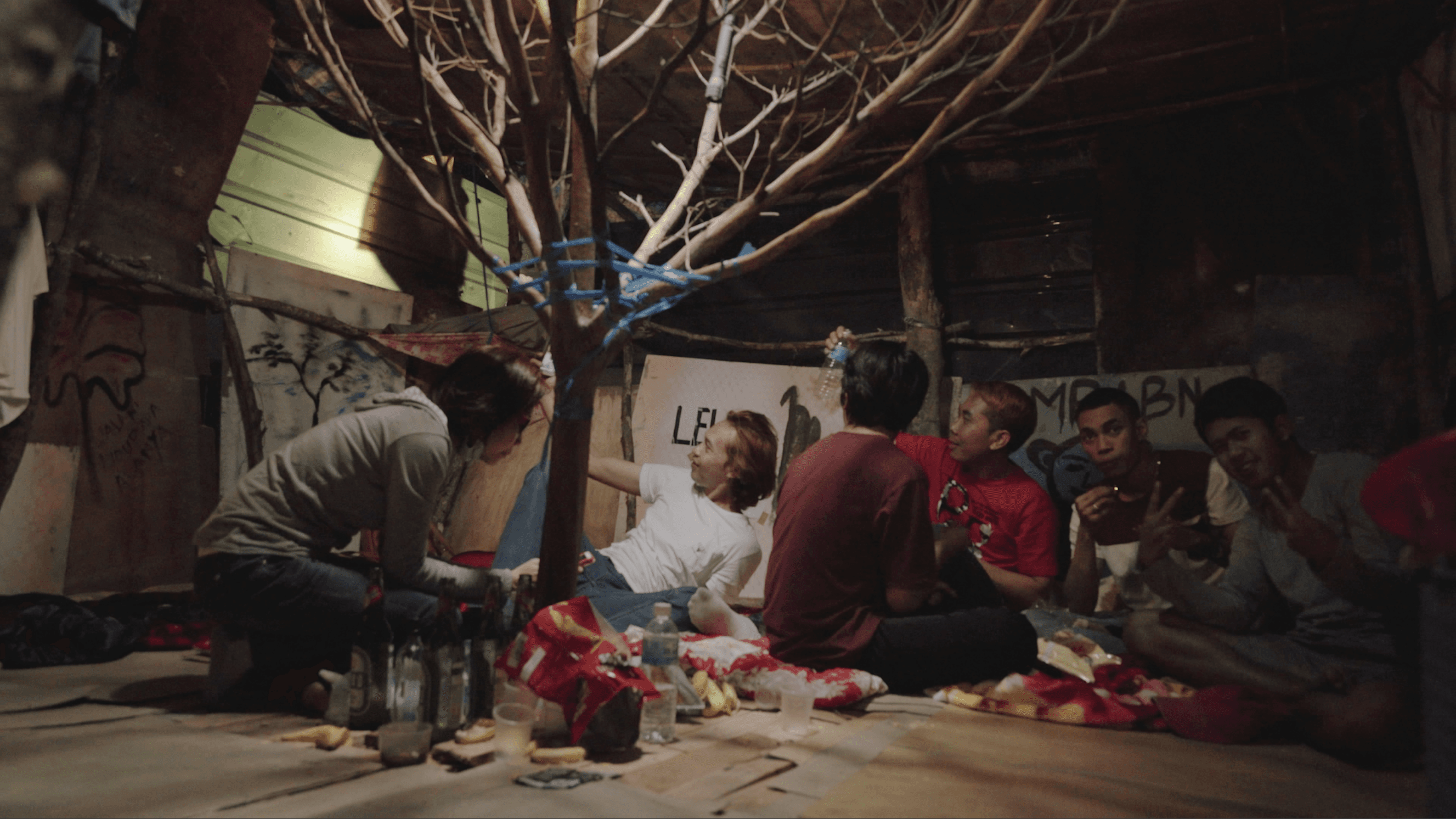
Reenactment involves the embodiment of bodily perception and memory. When migrant workers participate in Your Bros.'s workshops and reinterpret the "roles" that resonate with their own experiences, their bodily experiences trigger awareness and reflection on their real-life situations, shaping their agency. Like the migrant workers in Gubuk or (Hut) and Dorm, they collectively experience the embodiment of labor and transience, blurring the boundary between "performance" and reality. Interestingly, the laboring bodies that the migrant workers rely on for their livelihoods are also invested in labor relations within the production of images, once again playing the roles of real-life laborers. Reality and enactment cannot be separated.
The spaces presented in Gubuk or (Hut) and Dorm, resembling theatrical settings, also establish a unique relationship with the body. When the body enters these magical spaces, it takes on new identities and examines the complexities of life's circumstances. In reality, the relationship between the body and space also replaces the social relations of the laboring class. For example, the laborers in factory spaces are required to sit in the same position for extended periods, performing the same tasks, or migrant workers congregate in narrow and cramped dormitories. These experiences shape diverse bodily experiences that are imbued with ideological constraints and violence.
如何敘述與重演移工的身體?你哥影視社的三組創作關鍵詞 / 蔡倩怡
你哥影視社(下簡稱「你哥」)由三位不同專業的藝術家/創作者組成-藝術家蘇育賢、藝術史研究者廖修慧及建築師田倧源。三人以群體形式持續地介入移工的主題-但拒絕讓移工淪為僅被拍攝的議題對象,改以連串的田野調查、工作坊來與移工們互動、學習與創作,儼如構建了一套獨特的方法學。這種貼近參與式藝術(participatory art)的方式如何搖撼、甚或挑釁紀錄片的權力與倫理關係?以紀錄片常見主題-「重演」切入,你哥的創作方法如何通過重演的身體經驗來覆寫真實的新聞事件、並演繹真實的複雜性?此文嘗試以#紀錄片、#群體及#身體等幾組關鍵詞來回應這些命題。
#紀錄片(#參與式藝術 #重演)
現時對紀錄片的討論常落入Bill Nichols的七種分類。無疑此劃分方式能奠下讓大眾較易理解的認知系統及基礎,但同時演變成過於簡便的危機,無法回應愈趨複雜的紀錄片形態。好像近年紀錄片與當代藝術的關係千絲萬縷,不少展覽影像以紀錄片的姿態示人(所謂的「紀錄片轉向」(Documentary Turn)),或數量更多的紀錄片作品也嘗試進入當代藝術空間展示(中國獨立紀錄片導演王兵便是一顯例)。這樣的演化也許能擴延紀錄片的邊界,並不斷重新改寫紀錄片的「定義」與詮釋。如學者Erika Balsom與Hila Peleg便曾指出當代藝術如何撩動紀錄片的機制,並展開嶄新的美學可能。 但我們不能忽略的是,「當代藝術」的走向會否漸成紀錄片的必然性而繞過對真實拍攝對象的關顧?當代藝術的體制會否吸納紀錄片原有的野生根莖與能動性?
你哥的特殊創作方式恰好能回應如此脈絡,展示了紀錄片與當代藝術混雜的策略。你哥在不同訪問中亦提及,組成的起源來自讀書會,成員們早期閱讀黃春明的《莎喲娜啦.再見》,啟發自台灣文學的現實主義路徑。有趣的是,他們並未有停留於現實主義的美學形式,而是另闢蹊徑尋找介入與連結的途徑。他們從新聞媒介中獲悉移工在台灣的處境,並進行深入的田野調查,與移工於長期的工作坊中交流互動——創作與介入早於攝影機開啟前發生。
這種以工作坊主導、並以重演來覆寫真實的方式涉及兩個關鍵面向。一是對於影像生產的詰問與重塑。你哥在不少訪問中不違言對大眾媒體上如何展示移工的質疑;新聞報導如何與社會共識、意識形態合謀矮化特定群族並非鮮見,當權力機關亦以拍攝電影的姿態來捕捉移工,便不禁引起聯想:固有的紀錄片拍攝方法是否也同樣參與影像生產的暴力?拍攝者又能如何協調與被拍攝者的必然張力與權力不對等的關係?重演(reenactment)在這連串的叩問中打開了異質的空間,鬆動紀錄片乃「真實再現」的執迷,以至創造出對紀錄片媒介躬身自省的能耐。你哥亦強調他們作品中的重演乃沒有預設的劇本。因此我們能在《NALAM》中看到你哥以幽默的方式來重演印尼移工Nalam被警察追捕的過程,以至展露了場面調度的穿崩也毫不介意;《(阮國非)》則將新聞報導的聲音作畫外音,同步呈現了塑造重演現場的過程,最終越南移工「阮國非」缺席,只有兩名「警察」根據新聞與口供來仿效開了九槍射殺阮國非的場景,確鑿的證據成了開放性的詰問。此兩個例子也展示了你哥如何通過重演的形式來拆解影像生產的政治性—紀錄片的的真實性並非先驗,而是需要移工的參與及演出來實踐;並且透過工作坊與重演過程中的反覆質疑、叩問、動搖而創造出無法安妥擺放的「真實」,且不斷行進、無法定性。
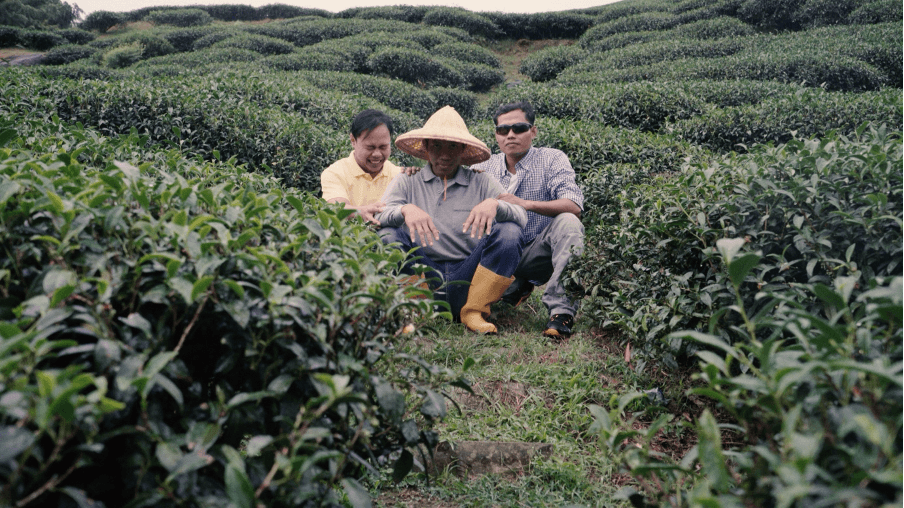
你哥引領非專業演員的(俗稱素人)移工重演他們所置身的處境,這亦帶來另一面向:你哥採用貼近參與式藝術的形式來介入移工群體,讓拍攝過程與剪接後的影像不再成為中心,反倒更強調你哥的成員與移工們所建立的關係與溝通,並製造了特殊的空間讓他們以根植的母語述說從自身經驗演化或類同的故事(是故翻譯的現身也成了重要元素,既強調語言差異的必然存在,以至思索不同的文化處境能如何被轉譯,你哥的成員又可如何理解)。你哥通過共同(與共時)的行動而成了參與式藝術的創作方式,將原有影像生產改裝成文化行動、建立社群。即如跟參與式藝術密切相關的「關係美學」(Relational Aesthetics)所提倡的:以社會關係為本體(ontology)而非僅視為媒材(media)並藉此重構當代藝術體系中的美學政治與機制;你哥的做法也嘗試讓所謂片場的製作空間換成實驗場域,挑戰影像製作的美學形態與秩序。更重要的是,當移工成為被拍攝對象,他們的勞動狀況與社會條件,以至被鮮有認知的話語權等,如何通過紀錄片的獨特媒介來展現?當中涉及大量的倫理問題,包括創作者如何介入、溝通與敘述而非代言等。參與式藝術誠然非靈丹妙藥,但能讓移工能共同參與其中,並且在強調鏡頭與創作者介入的重演當中(你哥的作品時常出現穿幫,甚或到了如《工寮》更在片末刻意揭露重演的「片場」空間,讓觀者意識到這絕非意圖還原真實),開展對話與討論的可能,破除了大眾媒體所塑造的真實幻象。
不過,需要注意的是,當你哥的作品參與影展或於展覽空間展示時,如何讓原有所搭建的複雜脈絡與創作手法,以至於所生長的對話空間及移工的參與經驗仍能被完整地攤陳,而不讓文化體系吸納而成了扁平的影像作品?
#群體
紀錄片很大程度上也通過拍攝者與被拍攝者的共同創造而成,因此難以停留於傳統的「作者論」框架來理解。當去除導演為中心的拍攝模式,群體合作成了另一種策略與出路。由蘇育賢、廖修慧及田倧源所組成的創作群體,能分享不同專業領域的經驗,並且可分擔拍攝上的不同崗位與職責。拍攝移工的過程中,被反覆拷問的除了是移工的生活處境,還有影像生產過程中的權力關係及暴力等。因此,群體的拍攝不單由你哥的三人主導。他們在不同訪問中亦曾提及,在長達數月的工作坊中,移工們的經驗分享成了共同創作的起始,甚至部分工作坊的過程亦直接成了拍攝的一部分。你哥對於群體的想像亦非僅限於他們與移工的單一關係,更包括了翻譯者,為他們與移工的溝通搭建了文化轉譯的可能。這種群體的協作模式在關顧移工的生活及工作處境時,亦同時面對拍攝模式的權力不對等,因而嘗試解除拍攝中的層級關係,以自省的態度來建立群體。
#身體
最後談及身體。《(阮國非)》正好回應了如何以重演來擴展對身體的操演及想像。如上文所言,《(阮國非)》中扮演警察的兩位「演員」就僅有的「證據」來重演與越南移工阮國非搏鬥並最終射殺了他而作出滑稽的身體律動。身體不單是演繹證據與陳述的敘事工具;在《(阮國非)》的語境中,身體亦實現了不成立的重演(主角阮國非的扮演者並未在場)。反覆的身體動作製造了荒誕的效果,促使我們詰問真實的確定性。如學者Michele Pierson所言,重演是讓經驗、行為或事件重覆,並在重覆的過程中轉化。 [2]《(阮國非)》的例子中,重覆的身體動作將原來的暴力攤陳顯現,並讓隱而未見的阮國非重新建立主體。
重演涉及身體的感知及記憶的體現。當移工參與你哥的工作坊並重新演繹與自身互通的「角色」,其身體經驗啟動了他們對現實處境的覺察與反思,並形塑了他們的能動性。好像《工寮》與《宿舍》的移工們,共同體驗了勞動與飄泊的身體,在「扮演」當中亦虛亦實。有趣的是,移工們原賴以為生的勞動身驅現於影像生產中亦投入了勞動關係,並再次扮演真實生活中的勞動者,現實與操演無法分割。
《工寮》與《宿舍》中所展現尤如劇場般的空間,亦與身體建立了異殊的關係。當身體走進該魔幻的空間中,如同獲得新的身份,審視生活的複雜處境。現實中,身體與空間的關係亦替代了勞動階層的社會關係。如工廠空間中勞動者需長時間坐在同樣位置進行同樣工序,或移工們聚合於狹窄微小的宿舍等,也形塑了歧異的身體經驗,並被注滿了意識形態的限制與暴烈。
===
Reference 参考
[1] Balsom, E., & Peleg, H. (Eds.). (2016). Documentary across disciplines. The Mit Press.
[2] Pierson, M. (2009). Avant-Garde Re-Enactment: World Mirror Cinema, Decasia, and The Heart of the World. CINEMA JOURNAL, 49(1), 1 - 19. https://doi.org/10.1353/cj.0.0171
>>>
作品名稱:(阮國非) / (Nguyễn Quốc Phi) 2017 年 8 月 31 日,越南逃跑外勞阮國非在郊區被警察連開九槍身亡,警方說辣椒水與警棍都對他無效。 除了媒體拍攝的案發現場照片,並無任何影片得以還原這個充滿神秘色彩的事件。
Director: SO Yo-Hen, an art enthusiast, attended the Graduate Institute of Arts at Tainan National University of the Arts and is currently a member of Your Bro's Filmmaking Group. His creative work spans various mediums, and he approaches it without preconceived notions about what he's doing. |
>>>
作品名稱:工寮 / Gubuk or (Hut) 本計畫從角色設定、劇本結構、內部美術設計,都是透過與移工進行工作坊而生產的,劇組在一間轉型的工廠中,以工廠遺留下來的材料搭建了一個「工寮」,這個工寮收留著每一位有著各自原因的逃跑勞工,也收留著每一段逃跑的故事。
導演:
SO Yo-Hen, an art enthusiast, attended the Graduate Institute of Arts at Tainan National University of the Arts and is currently a member of Your Bro's Filmmaking Group. His creative work spans various mediums, and he approaches it without preconceived notions about what he's doing. |